
How to tell when sourdough is properly proofed
By Ashleigh Stent · 8 min read
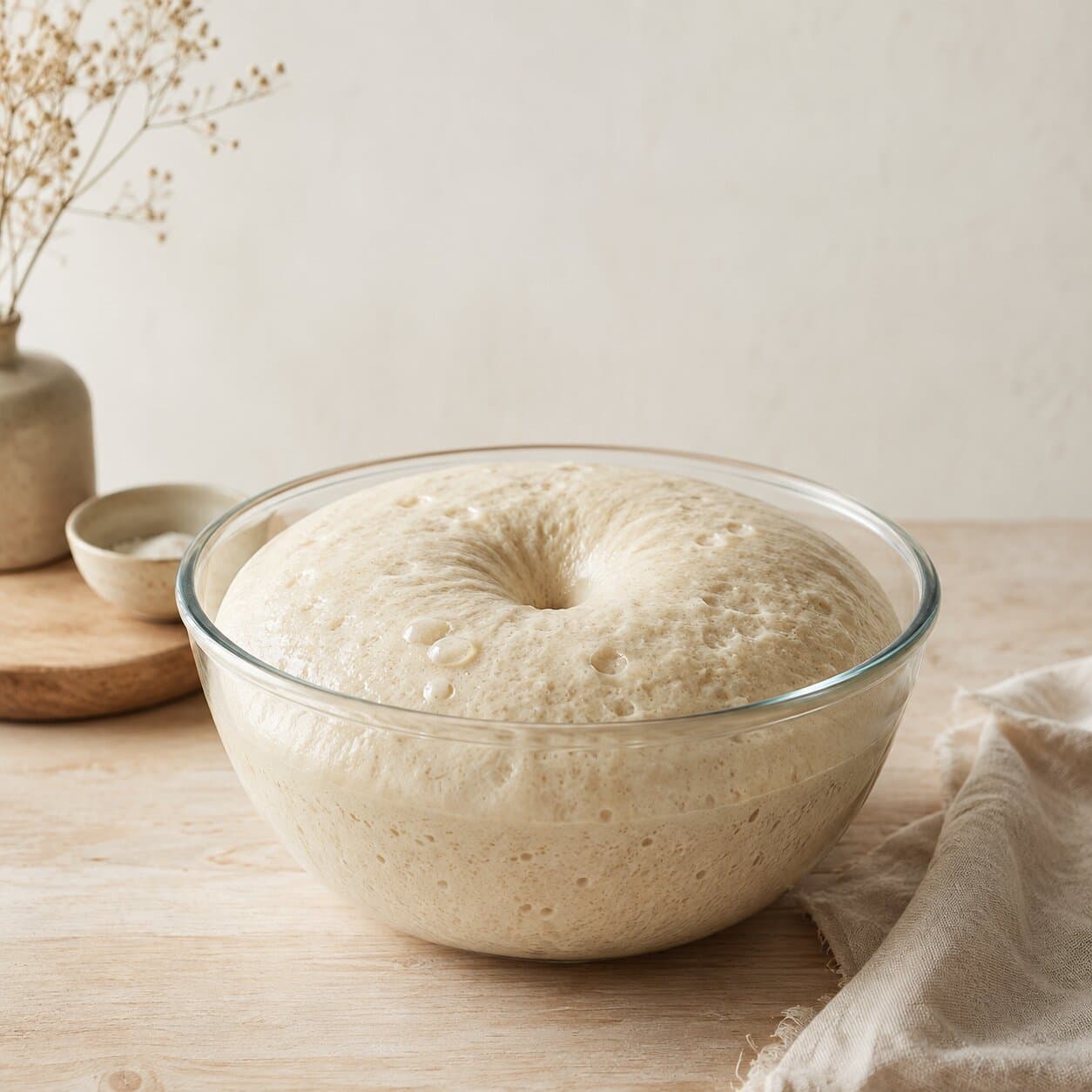
Proofing is the part of sourdough that recipes get most evasive about, and for good reason: there is no number that works in every kitchen. The same dough that is perfect after four hours in a warm summer kitchen might need seven in a cold one. So the skill that actually matters is reading the dough, not setting a timer. Once you can tell what a properly proofed dough looks and feels like, the timings in any recipe become a rough guide rather than a rule you are anxious about breaking.
There are two separate proofing stages, and people often confuse the signs for one with the other. Bulk fermentation is the long rise after mixing, with the dough still in the bowl. The final proof, sometimes called the second proof, happens after you have shaped the loaf. Each has its own tell-tale signs.
Reading bulk fermentation
Bulk is where most of the flavour and structure develops, and getting it right matters more than any other single step. You are looking for several signs together, not just one:
- The dough has risen by roughly 50 to 75 percent in volume. Not quite doubled, despite what older recipes say. A straight-sided container with a mark on the side makes this easy to judge.
- The surface has gone from rough and slack to smooth and domed.
- There are bubbles visible on the top and along the sides of the container.
- The dough jiggles like a set jelly when you nudge the bowl, rather than sloshing.
Ending bulk too early is the single most common beginner mistake, and it produces a dense, tight, slightly gummy crumb no matter how well you shape and bake. The dough simply has not built up enough gas yet. It is worth being patient here.
The poke test for the final proof
Once the loaf is shaped and resting, the poke test is the most reliable check there is. Lightly flour a fingertip and press gently into the dough, about a centimetre deep, then watch how the dent behaves.
- Springs back quickly and fully: underproofed. The dough needs more time. If you bake now you will get a tight crumb and the loaf may burst at the side as trapped gas forces its way out.
- Springs back slowly and leaves a slight dent: this is the sweet spot. Bake now.
- Does not spring back at all, and the dent stays: overproofed. The gluten has run out of strength. The loaf will spread flat and bake dense with a pale, blistered crust.
What under and over-proofing look like in the crumb
The most useful learning happens after you cut the loaf open, because the crumb tells you exactly what went wrong. An underproofed loaf has a dense band near the base, sometimes a tight gummy line, and a generally closed crumb. It often has a dramatic but uneven burst where the dough blew out at a weak point instead of opening at the score.
An overproofed loaf is the opposite: it spreads sideways rather than up, has little oven spring, and the crumb can be either weirdly uniform and cottony or collapsed with large tunnels near the top. The crust browns poorly because the yeast has eaten most of the available sugars. If you photograph your crumb each bake and note how long bulk took, you will learn faster than any article can teach you.
Why the clock lies
Fermentation is driven by temperature far more than by time. A dough at 26 degrees Celsius can finish bulk in three to four hours, while the same dough at 19 degrees might take seven or eight. The amount of starter you used and how active it was at peak also move the timing. This is why two bakers following the identical recipe get different results, and why a recipe that worked in July feels broken in January. Trust the signs, not the suggested hours.
If you want a head start on the timing for your own kitchen, the timeline planner works backwards from your target bake time and adjusts for kitchen temperature, so you at least know roughly when to start watching for the signs.
The cold proof shortcut
Many bakers do the final proof in the fridge overnight, which slows fermentation right down and gives you a wide, forgiving window. A cold dough is also firmer and far easier to score. If you are nervous about catching the exact moment, a long cold proof takes most of the pressure off, because the dough moves slowly enough that being an hour out barely matters. There is more on this in the guide to same-day versus overnight schedules.
Put it into practice with the classic white sourdough recipe, or work out your exact weights with the calculator.
Keep reading
- Stretch and fold, explained: building strength through bulk
- Sourdough troubleshooting: and how to fix each one