
Same-day vs overnight sourdough: which schedule to use
By Ashleigh Stent · 9 min read
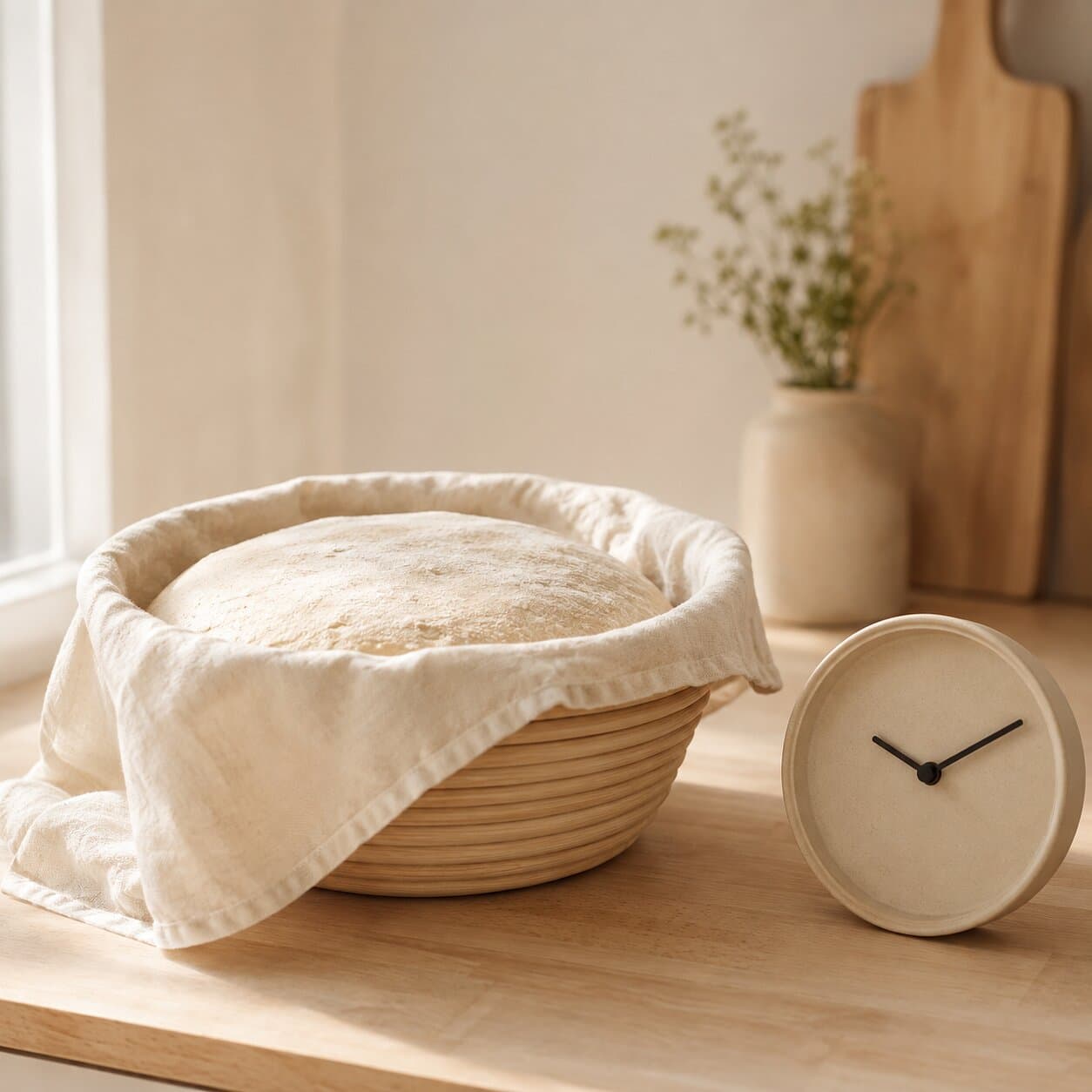
One of the quiet freedoms of sourdough is that you can bend it around your life rather than the other way round. The same dough can be baked start to finish in a single day, or split across two days with a long rest in the fridge in between. Neither is more correct. They produce slightly different loaves and they suit different days, and once you understand what each one does you can pick whichever fits the week you are actually having.
The same-day bake
A same-day loaf runs from morning to evening at room temperature. You feed your starter early, mix when it peaks, run bulk fermentation through the middle of the day with your folds, shape in the afternoon, give it a final proof on the counter, and bake before dinner. The whole thing takes roughly eight to twelve hours of being around the house, though only a few minutes of that is hands-on work.
The appeal is obvious: fresh bread the same day, and no fridge juggling. The catch is that the final proof at warm room temperature moves quickly, so you have to watch it. Miss the window by an hour on a hot day and you can tip over into overproofing. A same-day bake rewards being at home and paying a little attention.
The overnight cold proof
The more popular method for working people splits the bake across two days. You do the mixing, bulk fermentation and shaping on day one, then put the shaped loaf in the fridge overnight, sometimes for as long as 24 to 48 hours. The cold slows fermentation to a crawl, so the dough proofs gently while you sleep or go to work. The next day you bake it straight from the fridge, no warming up required.
This is called retarding, and it has three real advantages. It fits around a job, because the slow window is hours wide rather than minutes. It makes scoring far easier, because cold dough is firm and holds a clean cut. And it deepens the flavour, because the bacteria in the starter keep working slowly in the cold and produce more of the tang that people associate with good sourdough.
How they actually differ in the loaf
- Flavour: a cold-proofed loaf is usually tangier and more complex. A same-day loaf is milder and sweeter, which some people actively prefer.
- Crust: the cold dough tends to blister and crackle more, giving that freckled, glassy crust. It also browns a little deeper.
- Crumb: both can be excellent. The cold proof gives you more margin to nail the proofing, which often means a more open, even crumb in practice simply because it is harder to get wrong.
- Scoring: the cold loaf wins comfortably. Firm dough takes a blade cleanly, where warm slack dough drags and tears.
Which should you use
If you are home for the day and want bread tonight, bake same-day. If you work, or you want the easiest possible scoring and the deepest flavour, do the overnight cold proof. Most experienced home bakers settle into the overnight method as their default precisely because it fits around everything else, and they keep same-day baking for lazy weekends when they happen to be in.
A common beginner worry is that the dough will over-proof in the fridge overnight. It can, if your fridge runs warm or the dough went in already nearly proofed, but in a normal fridge at 4 degrees Celsius a shaped loaf is comfortable for a good 12 to 18 hours. Put it in slightly under-proofed and the cold finishes the job slowly.
A simple two-day timeline
- Morning, day one: feed the starter.
- Late morning: mix the dough once the starter peaks.
- Through the afternoon: bulk fermentation with three or four sets of folds.
- Early evening: shape and place in a banneton or bowl.
- Into the fridge, uncovered or lightly covered, overnight.
- Next morning: bake straight from the fridge into a hot oven.
To pin these steps to real clock times for your own kitchen, run them through the timeline planner, which works backwards from when you want to take the loaf out of the oven.
Ready for a full recipe? The classic white sourdough works with either schedule, and the calculator gives you the exact weights.
Keep reading
- How to tell when sourdough is proofed: reading the dough, not the clock
- Scoring sourdough: cold dough scores best