
Sourdough hydration: a practical guide
Hydration is the ratio of water to flour in your dough, expressed as a percentage. 72 percent hydration means 72g of water for every 100g of flour. It is the single most important number for understanding how a sourdough will behave, because it shapes everything downstream: how sticky the dough is to handle, how open the crumb turns out, how thin and crisp the crust gets, and how much room for error you have along the way.
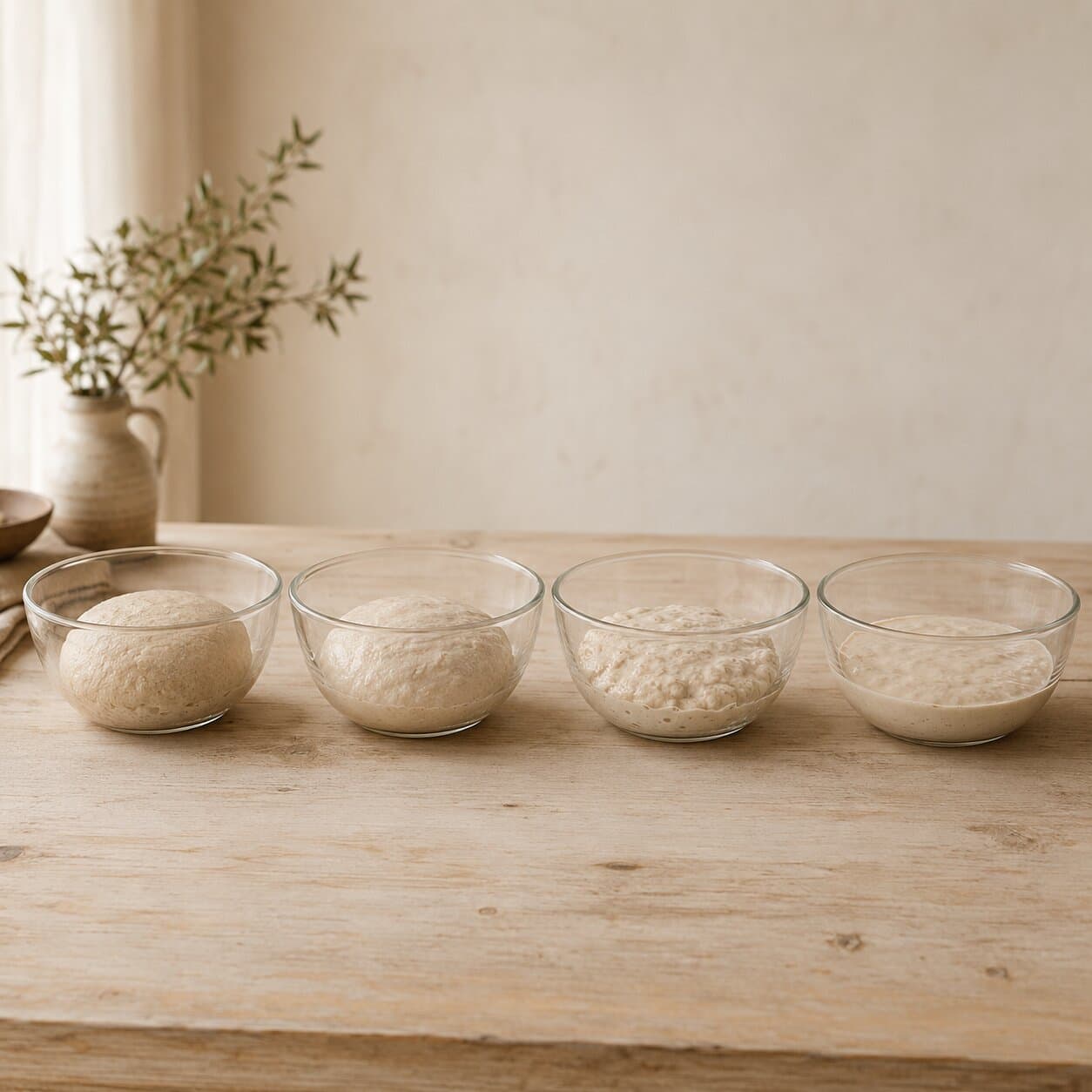
Choosing your hydration
- 65 to 70 percent (low): easy to handle, holds its shape, tight and even crumb. A great starting point and the right choice for sandwich loaves and tin bread.
- 71 to 77 percent (medium): the sweet spot. Open crumb, still manageable dough. Most home bakers live here, and 72 percent is the classic first number.
- 78 to 85 percent (high): slack, sticky, dramatic open crumb. Confident hands only, and ideally a strong bread flour that can hold all that water.
What hydration actually changes
Higher hydration gives the gas more room to expand, which is how you get those big irregular holes people chase. It also produces a thinner, crisper, more blistered crust because the extra steam works harder in the oven. The trade-off is handling. A wet dough spreads, sticks and is harder to shape, and it is far less forgiving of a slightly over-fermented bulk.
Lower hydration is the opposite. The crumb is tighter and more uniform, the crust is a little thicker and chewier, and the dough behaves itself on the bench. If you want bread for toast and sandwiches rather than a showpiece, lower hydration is not a compromise, it is the right answer.
Why flour type changes the answer
Wholemeal and rye flours absorb more water than white because the bran and germ soak it up. If you set the same hydration percentage with wholemeal flour, the dough will feel noticeably drier and tighter than the white-flour equivalent. As a rule of thumb, add about 3 percent to your hydration for 100 percent wholemeal, or about 1.5 percent for a 50/50 blend. Protein content matters too: a strong bread flour with 12 to 14 percent protein can carry far more water than a weak plain flour, which is why high-hydration recipes always call for strong flour.
Our calculator does this for you automatically. Pick your flour type and it adjusts the water internally while still showing you the hydration figure you chose, so you do not have to do the sum in your head.
The autolyse and adjusting as you go
Whatever number you pick, give the flour time to drink. Mixing the flour and water and leaving them to rest for 30 to 60 minutes before adding salt and starter, known as an autolyse, lets the flour fully hydrate and makes a wet dough far easier to handle. If after that rest the dough still feels unworkably wet, hold a little water back next time rather than fighting it. Flour varies between brands and even between bags, so treat the recipe number as a starting point, not a law.
A starting point for beginners
72 percent hydration with white flour, 20 percent starter and 2 percent salt. That is the recipe most home bakers learn first, and it is a great baseline. Once you can reliably produce a good loaf at this hydration, push up to 75 percent and then 78 percent to chase a more open crumb. Change one thing at a time, and you will actually learn what each change does.
Try the calculator, pick your hydration and see exact gram weights for any loaf size.
Worked-example recipes
Each link is a full recipe with exact ingredients and step-by-step timeline.
- 800g, 72% hydration, white: the classic beginner loaf
- 800g, 75% hydration, white: slightly more open crumb
- 800g, 78% hydration, white: high-hydration territory
- 800g, 72% hydration, 50/50: balanced flour blend
Related guides
- Baker's percentage explained: the maths behind every recipe
- Feeding a sourdough starter: keep it active between bakes
- Stretch and fold, explained: wetter doughs need this
- Classic white sourdough recipe: step-by-step walkthrough