
Stretch and fold, explained for beginners
7 min read
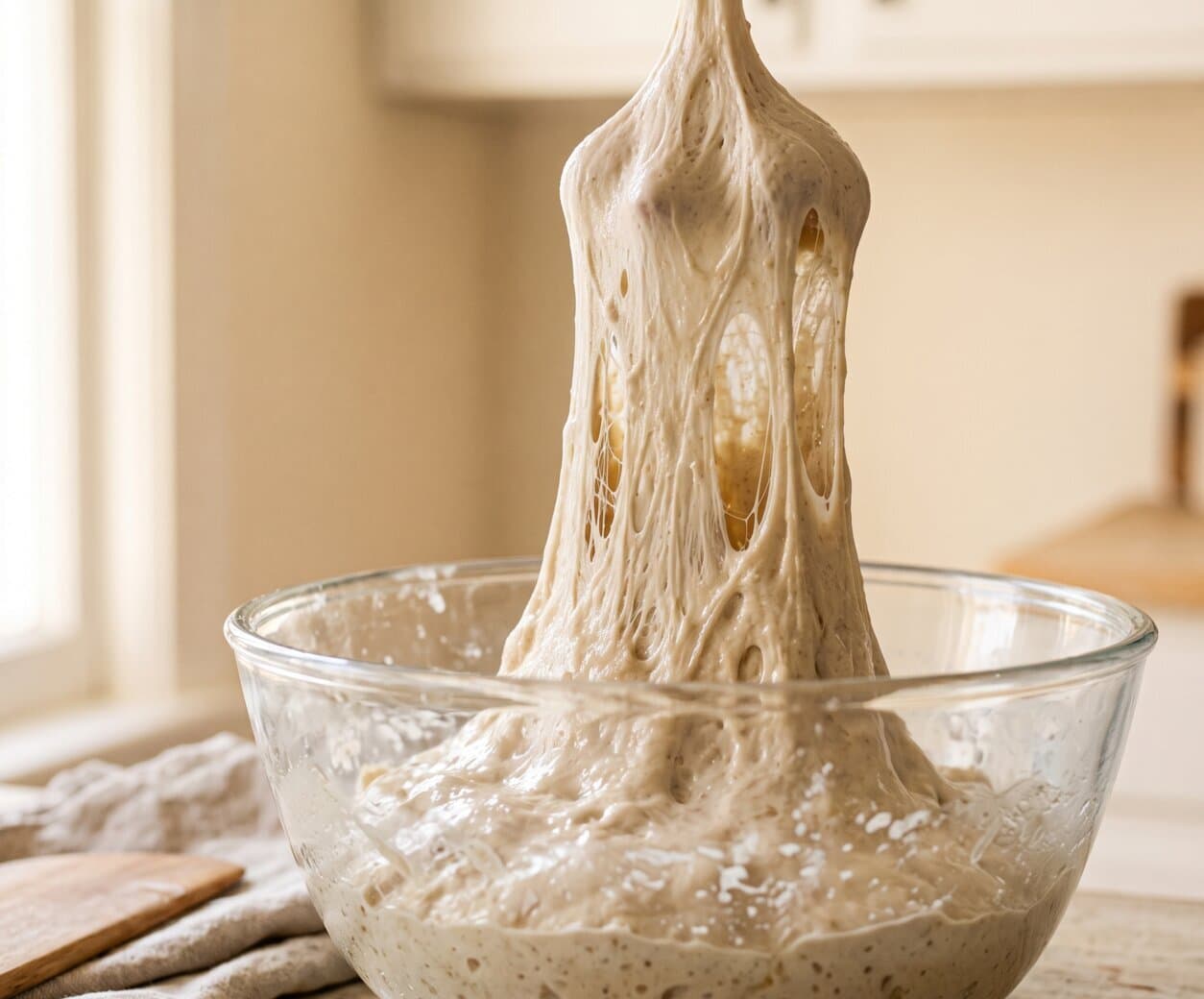
Almost every sourdough recipe tells you to do "a set of stretch and folds every 30 minutes" and then moves on, as if you already know what that means and why it matters. It is the single most mystifying instruction for a new baker, partly because it sounds technical and partly because nobody shows you what good dough is supposed to feel like. This is the plain version: what a stretch and fold actually is, what it does to your dough, how to do one, and how to know when you have done enough.
What a stretch and fold is
A stretch and fold is a gentle way of building strength in the dough without kneading. Instead of working the dough on a bench for ten minutes, you give it four quick pulls in the bowl and then leave it alone for half an hour. The technique suits the high hydration doughs that sourdough is known for, where traditional kneading would just smear sticky dough all over your worktop.
One "set" is four folds, one from each side of the bowl. Most recipes ask for three or four sets, spaced about 30 minutes apart, during the first couple of hours of bulk fermentation. After that you stop and let the dough ferment undisturbed.
How to do one, step by step
- Wet one hand with water so the dough does not stick to it.
- Slide your hand under one side of the dough and lift it straight up until it stretches but does not tear.
- Fold that flap over to the opposite side and press it down gently.
- Turn the bowl a quarter turn and repeat. Four lifts, one full rotation, and the set is done.
- Cover the bowl and wait roughly 30 minutes before the next set.
The whole set takes about twenty seconds. If the dough fights back and will not stretch far, that is fine, just fold it as far as it comfortably goes. It will loosen up again before the next set as the gluten relaxes.
What it actually does
Folding does three jobs at once, which is why it has stuck around as the standard method for home sourdough:
- It aligns and tightens the gluten network, so the dough can trap the carbon dioxide the wild yeast produces. That trapped gas is what gives you an open, airy crumb instead of a dense brick.
- It redistributes the temperature and the fermenting yeast through the dough, so it rises evenly rather than fastest at the warm edges.
- It gives you a regular moment to feel the dough. Over a couple of hours you will notice it change from a slack, shaggy mass into something smooth, springy and alive. Learning that feel is more useful than any timer.
Coil folds and slap and fold
Stretch and fold is the easiest method to learn, but you will see two others mentioned and it helps to know what they are.
A coil fold is gentler and works well later in bulk, once the dough is delicate and full of gas. You lift the middle of the dough with both hands, let the ends tuck under as it stretches, then set it back down and repeat from the other direction. It strengthens without knocking out the air you have worked to build.
Slap and fold, sometimes called the French fold, is the opposite: aggressive early strength building for very wet doughs. You lift the dough off the bench, slap it down, fold it over itself and repeat for a few minutes. It develops gluten fast, but it is messy and easy to overdo. For most home loaves, three or four sets of plain stretch and folds are plenty.
When to stop folding
Stop after the first two hours or so of bulk fermentation, once the dough feels notably stronger and more elastic than when you started. Folding late in bulk, when the dough is already full of gas, just deflates it and undoes the rise. After your last set, leave the dough alone and let bulk fermentation finish on its own.
How to tell bulk fermentation is done
This is the part recipes are vague about, because it depends on your kitchen temperature far more than on the clock. Look for three things at once:
- The dough has risen by roughly 50 to 75 percent in volume. Not quite doubled.
- The surface is smooth and slightly domed rather than flat and slack.
- There are visible bubbles on the top and along the sides of the bowl.
Underproofed dough gives you a dense, tight, gummy crumb. Overproofed dough goes slack, spreads out and cannot hold a shape when you tip it out. The first few times you bake, aim for somewhere comfortably in the middle and take notes on how long it took at your kitchen temperature. That record is worth more than any recipe's timing.
Common mistakes
- Folding too hard. You are not punishing the dough. Stretch only until it resists, then fold. Tearing the dough breaks the gluten you are trying to build.
- Dry hands. Wet your hand each set. Dry fingers drag and tear sticky dough.
- Folding for too long. More sets is not better. Once the dough is smooth and holds its shape, extra folds do nothing useful and can degas it.
- Watching the clock instead of the dough. Thirty minutes is a guideline. Warm kitchens move faster, cold kitchens slower.
Ready to put this into a full bake? Try the classic white sourdough recipe, or work out exact ingredient weights for your tin with the sourdough calculator.
Keep reading
- Sourdough for beginners the complete first-loaf walkthrough
- Sourdough troubleshooting and the small change that fixes each