
Feeding a 100% hydration sourdough starter
A sourdough starter is just flour, water and time, kept alive by feeding it regularly. The standard home-baker recipe is a 100 percent hydration starter, which means equal parts flour and water by weight. Our calculator assumes you are using this kind of starter because it is by far the most common and it keeps the maths clean. Feeding it is the one habit that stands between you and good bread, and it takes about two minutes.
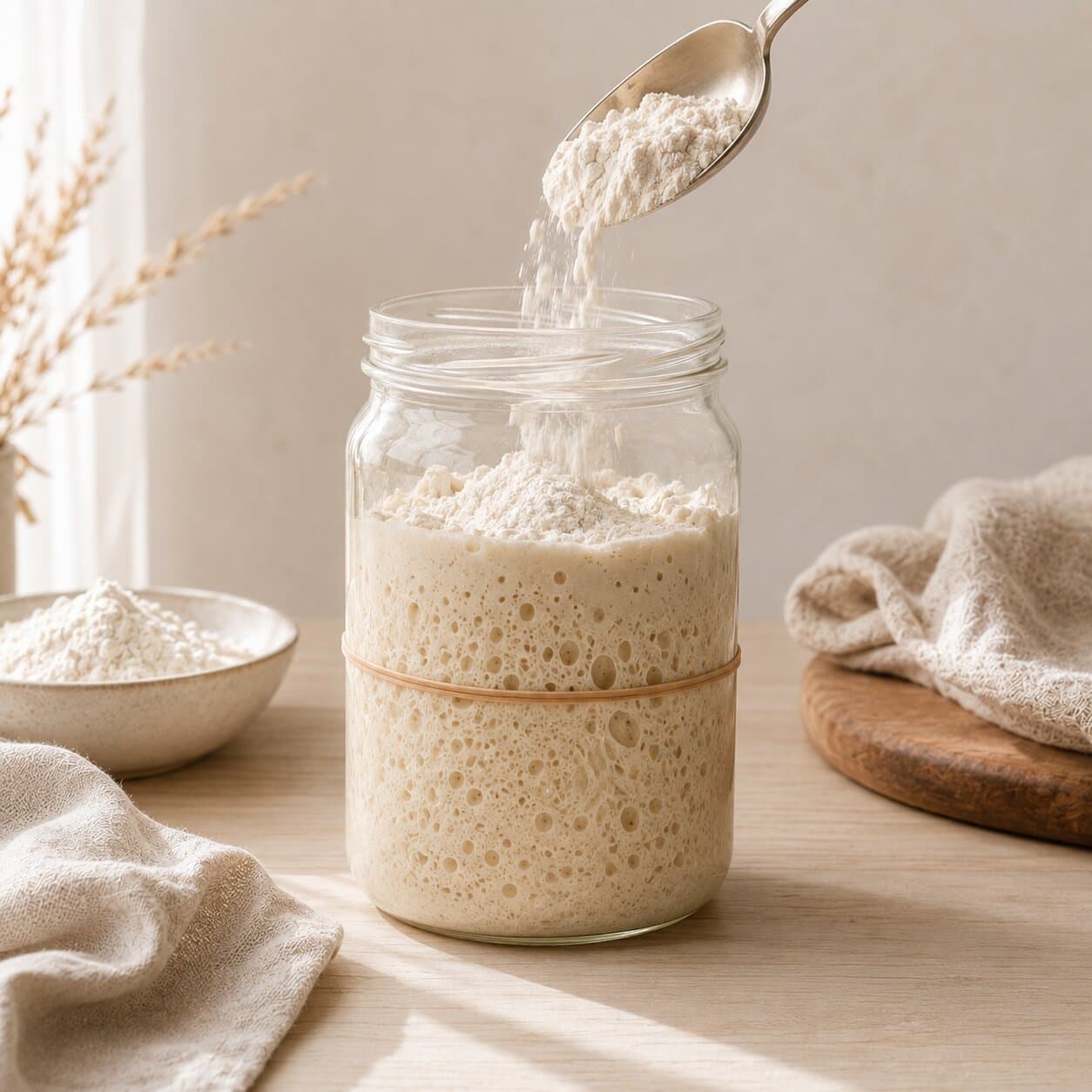
A reliable feed
Keep it simple: 1:1:1 by weight. If you have 20g of starter, feed it 20g of flour and 20g of water. Stir until smooth with no dry pockets, cover loosely so gas can escape, and leave it at room temperature. Discard down to that 20g before each feed, otherwise the jar grows out of control and the fresh flour cannot keep up with all the hungry yeast.
The ratio is a lever, not a rule. A bigger feed, such as 1:5:5 (one part starter to five of flour and water), takes longer to peak and is the trick for an overnight feed or a warm kitchen. A smaller feed like 1:1:1 peaks fast and suits a same-day bake. The more fresh flour you give relative to the starter, the longer it takes to ripen.
When is it ready to bake with?
At room temperature, around 20 degrees Celsius, a well-established starter will roughly double in 4 to 6 hours after feeding. You want to use it at or just after peak, when it has risen, looks domed on top and is just starting to flatten, with visible bubbles throughout. Past peak it sinks and turns sour, and while it will still work, it has less lifting power. If you are unsure, drop a small spoonful into a glass of water: if it floats, it is full of gas and ready to go.
How temperature changes everything
Yeast and bacteria are temperature driven. A starter in a 25 degree kitchen might peak in 3 to 4 hours, while the same starter at 18 degrees can take 8 hours or more. This is why a feed that worked perfectly in summer seems sluggish in winter. The fix is not to panic but to adjust: feed earlier, find a warmer spot such as the top of the fridge or an oven with just the light on, or use a larger feed ratio so the timing lands when you want to bake.
How much starter to keep on hand
Most home bakers keep just 20 to 60g of starter in a jar. There is no reason to keep more, because you build up exactly the amount a recipe needs in the feed before a bake. If you bake weekly, store the jar in the fridge between bakes, which slows everything right down so you only need to feed once a week. Pull it out the day before you bake, feed it once or twice at room temperature, and it will be active by bake time.
Reviving a neglected starter
A starter forgotten at the back of the fridge for weeks is almost never dead. A layer of grey liquid on top, sometimes called hooch, just means it is hungry. Pour most of it off, discard down to a spoonful, and feed it 1:1:1 once or twice a day at room temperature. Within two or three days it should be bubbling and doubling again. Throw it out only if it grows fuzzy mould or turns pink or orange, which are the genuine danger signs.
Try the calculator, and once your starter is bubbling, get exact recipe weights for any loaf.
Next steps
- How to make a sourdough starter from scratch: if you don't have one yet
- Classic white sourdough recipe: your first bake, step by step
- Baker's percentage explained: the maths behind every recipe
- Sourdough hydration guide: picking the right percentage