
Sourdough starter troubleshooting: 12 problems and fixes
9 min read
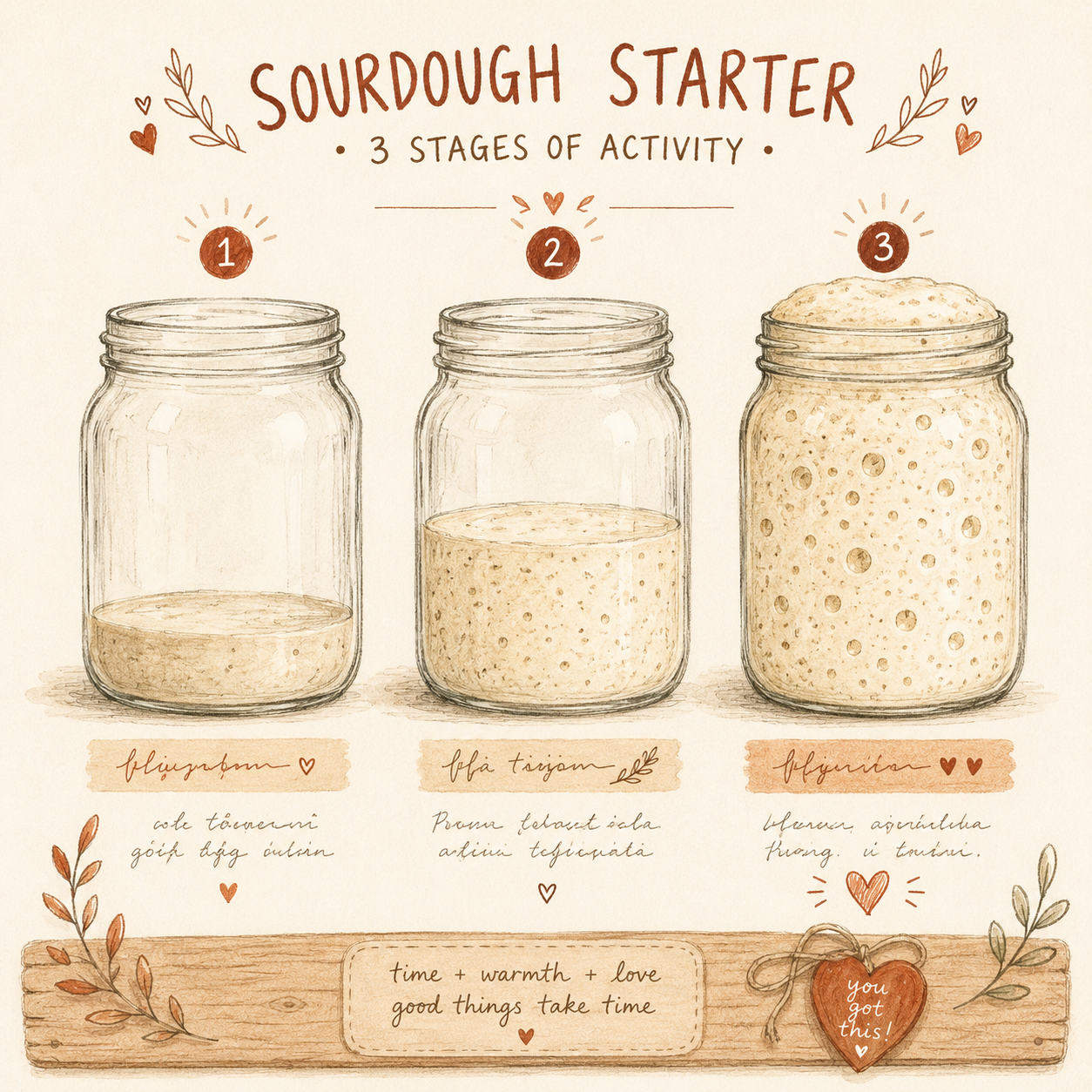
Most sourdough starter problems look dramatic and are actually fine. A few are a sign of real trouble. This is the field guide: 12 common scenarios, what each one means, and what to do. If your starter is doing something weird and you can't tell whether to panic, start here.
- 1. My starter isn't bubbling on day 3. Is it dead?
- No. Some starters take 7 to 10 days, especially if your kitchen is cold. Keep up daily feeds, move the jar somewhere warmer (around 22 to 24°C is ideal), and be patient. If you see no activity at all after day 5, switch one feed to wholemeal or rye flour — they carry more wild yeast than white.
- 2. My starter doubled on day 2 then went flat. What happened?
- Almost certainly the leuconostoc bacteria phase. They produce gas quickly in the first 24 to 48 hours then die off as the pH drops. The yeast and lactobacilli that will actually leaven your bread haven't established yet. Keep feeding daily and you'll see real activity again around day 4 to 6.
- 3. My starter smells like acetone or nail polish remover.
- Your starter is hungry. Acetone smell is a sign of stressed yeast. Feed it twice a day instead of once, and try a richer feeding ratio (1:2:2 — one part starter, two parts flour, two parts water by weight). The smell will mellow within a couple of days.
- 4. There's a dark liquid on top of my starter.
- That's hooch. It's the alcohol byproduct of an under-fed starter. Stir it back in if it's light brown, or pour it off if it's dark. Then feed your starter — and feed it more frequently going forward. Hooch is harmless but it's a sign the yeast burned through its food.
- 5. My starter is rising but very slowly — 12+ hours to peak.
- Two likely causes: (1) it's too cold — at 18°C a starter takes roughly twice as long as at 22°C; (2) it's still establishing. A mature starter at 22°C should double in 4 to 6 hours. If yours is slower than that after 2 weeks of daily feeding, move it somewhere warmer or do a couple of richer feeds (1:2:2).
- 6. I see pink or orange streaks. Should I throw it out?
- Yes. Pink, orange or fuzzy patches mean bacterial or mould contamination. A healthy starter can smell unusual — fruity, sharp, even slightly cheesy — but it should never be coloured. Start over with a clean jar.
- 7. My starter looks fine but my bread doesn't rise.
- You're probably using your starter at the wrong time. Use it at peak (domed top, full of bubbles, just starting to flatten) — not when it's risen but flat, and not before it has visibly risen. The float test is your friend: a spoonful in water should float when the starter is ready.
- 8. Do I have to feed it every day? I just want to bake on weekends.
- No. Once your starter is mature (about 2 weeks old), keep it in the fridge between bakes and feed it once a week. The night before a bake, pull it out, feed it, leave at room temperature, and it'll be active by morning. Read our full feeding guide for the maintenance routine.
- 9. My starter has a layer of dry crust on top.
- It's been drying out — your jar is too loosely covered, or it's been sitting in a draft. Scrape the crust off, stir what's left, and feed. Cover with a loose lid or cloth that lets gas escape but keeps moisture in. Don't seal it airtight; the pressure from CO₂ can crack the jar.
- 10. I forgot to feed for a week. Can it be saved?
- Almost always yes. Discard down to a tablespoon, feed 1:5:5 (e.g. 10g starter, 50g flour, 50g water), and leave at room temperature. It'll be sluggish for the first feed but should bounce back within 2 to 3 daily feeds. The starter is far more resilient than the internet suggests.
- 11. My starter is split: liquid on bottom, dry on top.
- Same problem as hooch and crust combined — it's underfed and partly drying out. Stir vigorously to re-incorporate everything, discard down to a tablespoon, and feed at 1:5:5. Cover more snugly. It will recover.
- 12. How can I tell when my starter is finally mature?
- Three signs, all together: (1) it reliably doubles in 4 to 6 hours at room temperature; (2) it has lots of bubbles throughout, not just on top; (3) a spoonful floats in water. Most starters reach this point between day 7 and day 14. If yours hits all three, it's ready to bake with.
The short version
A healthy starter is bubbly, smells pleasantly sour, doubles within 4 to 6 hours of feeding, and floats in water. Anything else is usually solved by feeding more often, keeping it warmer, or simply waiting a few more days. The only genuine emergency is mould or coloured streaks — in that case, start over.
Related reading
- How to make a sourdough starter from scratch — day-by-day plan
- Feeding a sourdough starter — the maintenance routine
- Common sourdough mistakes — what goes wrong with the bake itself
- Sourdough for beginners — the complete starter guide
When your starter is finally bubbling reliably, head to the calculator and get exact ingredient weights for any loaf.