
How to make a sourdough starter from scratch
8 min read
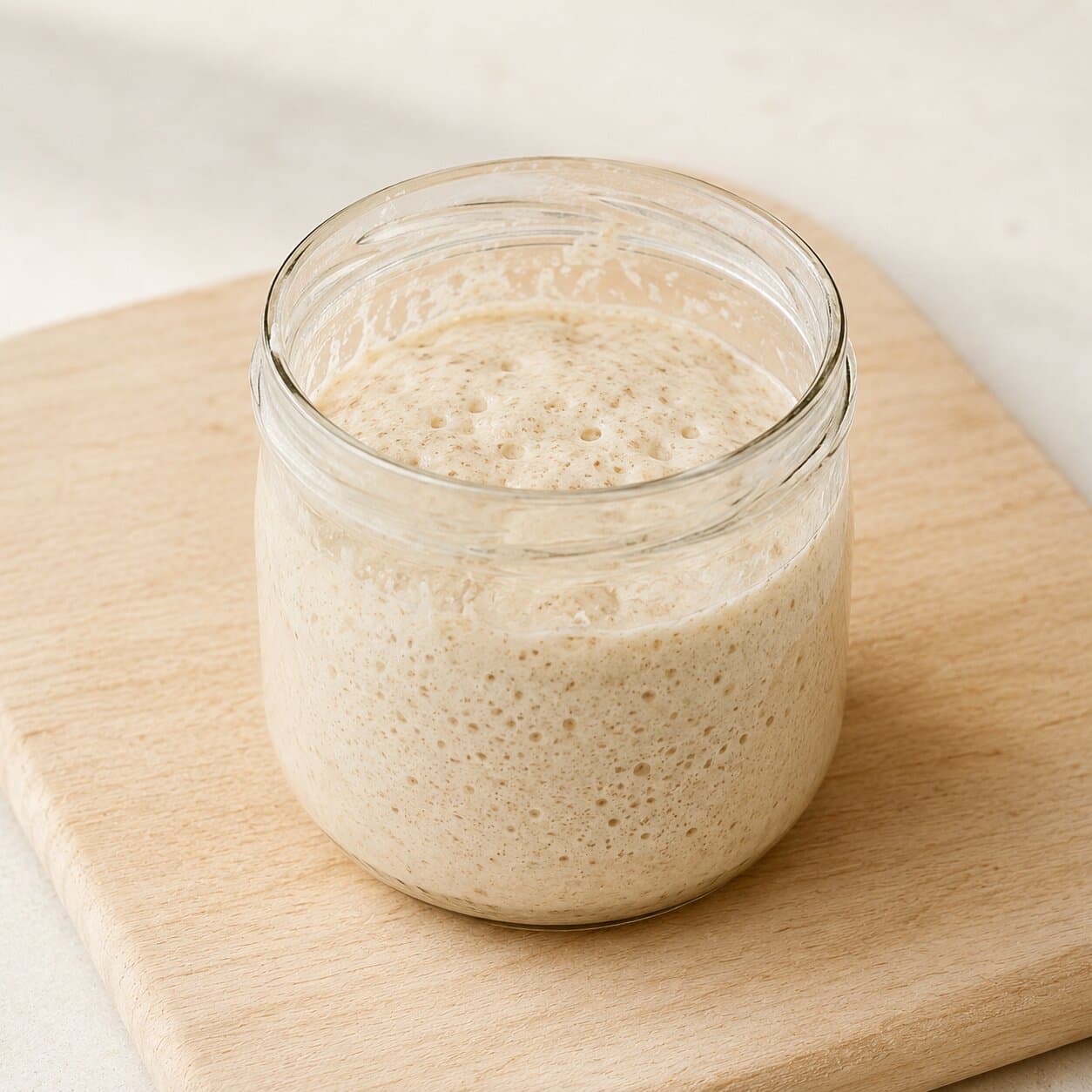
A sourdough starter is a living culture of wild yeast and bacteria that you grow in a jar. You only need flour, water and about a week of patience to make one. No commercial yeast. No kit. Here is the plan.
What you need
- A clean glass jar. A 500ml jam jar is perfect.
- Wholemeal or rye flour for the first feed. It kickstarts wild yeast.
- Plain white bread flour for the rest, or stick with wholemeal. Either works.
- Lukewarm water. Filtered if your tap water is heavily chlorinated.
- A digital kitchen scale.
- A spoon or chopstick for stirring.
The 7-day plan
Equal parts flour and water by weight. That is it. This is what bakers call a 100% hydration starter, which is what our calculator assumes.
- Day 1
What to do: Mix 50g wholemeal flour with 50g lukewarm water in a clean jar. Stir well. Cover loosely so gas can escape. Leave on the counter at room temperature, about 20°C.
What to look for: You will not see much. That is normal.
- Day 2
What to do: Discard about half. Add 50g flour, white or wholemeal, and 50g lukewarm water. Stir, cover loosely.
What to look for: Maybe a few small bubbles. Smell may be slightly sour or fruity.
- Day 3
What to do: Discard half. Feed 50g flour and 50g water. Stir, cover.
What to look for: More bubbles, possibly some rise. The smell will sharpen: fruity, tangy, maybe a little funky. Totally fine.
- Day 4
What to do: Switch to twice-daily feeds. Morning and evening, discard half, feed 50g flour and 50g water.
What to look for: It should be visibly rising and falling between feeds. You are getting close.
- Day 5
What to do: Continue twice-daily feeds.
What to look for: Doubling within 6 to 8 hours after feeding. Lots of bubbles. The smell becomes pleasantly tangy and slightly yeasty.
- Day 6
What to do: Continue feeding. Do the float test: drop a small spoonful in a glass of water. If it floats, your starter is mature.
What to look for: Reliable doubling within 4 to 6 hours. Active, domed, full of bubbles.
- Day 7
What to do: Your starter should be ready. Feed it once more, wait until it peaks in 4 to 6 hours, and use it to bake your first loaf.
What to look for: Doubled, domed, floats in water. Ready.
How do I know it is ready?
Three signs, all together:
- It reliably doubles in volume within 4 to 6 hours of feeding.
- It is full of bubbles, looks domed on top, and may slightly collapse if you wait too long.
- A spoonful floats in water.
Common worries
Mine is not bubbling on day 3. Do not panic. Some starters take 10 days. Keep feeding, keep it warm (22 to 24°C is ideal), and be patient. If your kitchen is cold, sit the jar somewhere warmer: on top of the fridge, or in an oven with just the light on.
It smells weird. Sourdough starters can smell wildly different at different stages: acetone, nail polish, gym socks, beer, vinegar. As long as you do not see pink, orange or fuzzy mould, you are fine.
Liquid on top. That is "hooch", which is alcohol from a hungry starter. Stir it back in or pour it off, then feed. It means your starter wants more food, more often.
Once it is ready
Feed it the night before you bake, let it peak, then use what you need. Store the rest in the fridge between bakes and feed it once a week. See our starter feeding guide for the maintenance routine.
Once your starter is alive, head to the calculator and weigh out what you have. It will work out the rest of the recipe for you.
Try your first bake
Once your starter is doubling reliably, these beginner-friendly recipes are good first bakes: